
 By
Are you retiring this year or next year? The thought of retirement is making you apprehensive. Till now, working income had kept household expenses manageable. While you have built a sizeable retirement pool, it is time to take the next step from contribution to withdrawal. This step should be taken carefully, as one wrong decision can make a significant portion of your retirement savings vanish. So before using your personal retirement portfolio, check the Canada Pension Plan (CPP) pay you are eligible for.
How to check your CPP pay before you retire
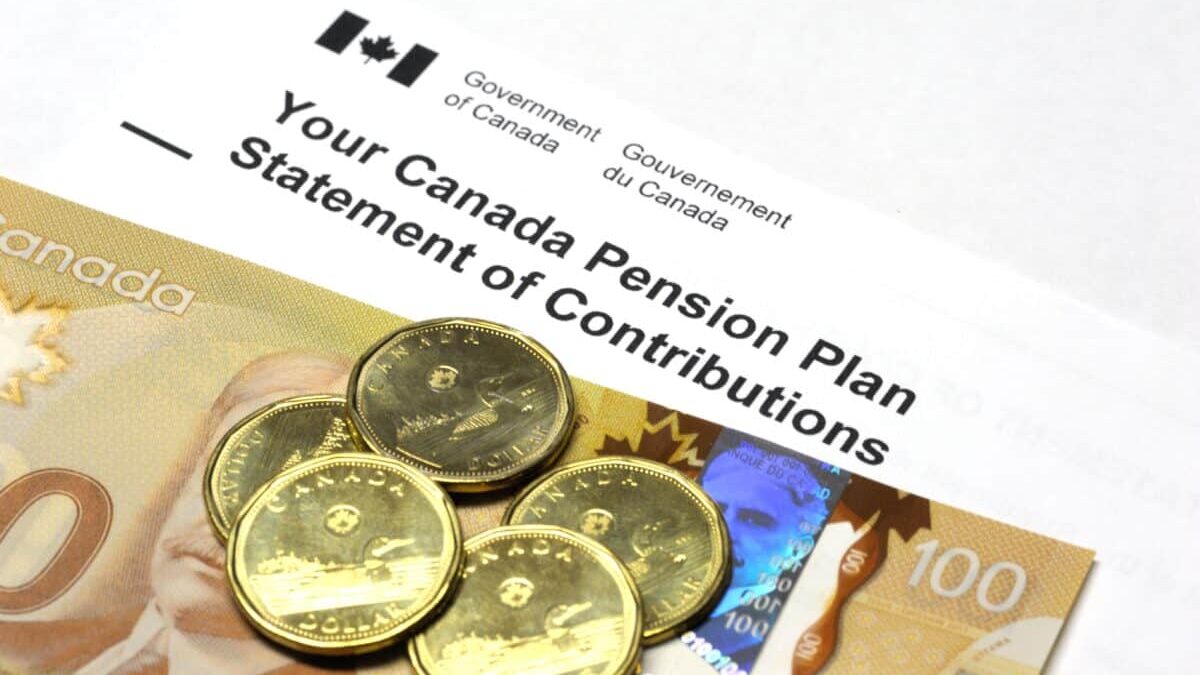
Your CPP pay depends on your contributions, the age at which you retire, and your pay scale. If you have made contributions to CPP in your lifetime, you can check your estimated CPP pay by logging on to the My Service Canada Account (MSCA) portal. On the dashboard, select “View my benefit estimates,” and you will get an estimate. This can help you determine how to structure your post-retirement portfolio that can give you sufficient passive income for daily expenses.
The MSCA portal also gives you a statement of your CPP contributions made to date under “View my contributions,” as well as the details of the current and last two years’ CPP payouts under “View my payments.”
How to structure your post-retirement portfolio
If you are considering taking the CPP payout at age 65, the average payout is $858.34, and the maximum is $1,507.65, as of June 2026. Before delaying CPP for the extra 42%, consider your health and life expectancy because CPP taken at age 70 will cross CPP taken at age 65 when you turn 81. Unless you are in a high tax bracket, sure of living past 85, or worried about outliving your retirement savings, delaying CPP may not make sense.
One reason to take CPP payout now
Every decision in the post-retirement portfolio depends on a fine balance between tax planning, disciplined withdrawals, and risk management. In this portfolio, the risk of negative returns is high, as no new investments will replace the losses. The luxury of time that you had in your pre-retirement portfolio is absent in your post-retirement portfolio.
So if you faced a loss in your investments, consider cutting your losses and moving to a safer stock with positive returns. Take the example of Telus Corporation (TSX: T). It slashed dividends by 55% this year, as heavy leverage looms on its balance sheet. This pulled down its stock price. Anyone having a significant portion of their post-retirement portfolio in Telus took a big hit. The company is unlikely to grow dividends for another five years as it stabilizes its balance sheet.
If you bought 1,000 shares of Telus at $17.50 per share back in December 2025, your investment value has slipped to $11,990. The expected annual dividend amount from 2027 has also been reduced to $750 from the expected $1,673 in 2026. Had you exited the stock immediately after the dividend cut was announced on July 31, 2026, your capital loss would be $4,110, as the share price was $13.39.
One of Warren Buffett’s quotes reads, “Should you find yourself in a chronically leaking boat, energy devoted to changing vessels is likely to be more productive than energy devoted to patching leaks.”
What next?
You need to fill the $923 gap the dividend stock created in your annual passive income. The $858 CPP payout per month can help. Telus could be a hold in a pre-retirement portfolio over hopes of recovery in the long term, but it is too risky in the post-retirement portfolio.
Considering its highly leveraged balance sheet, risk of interest rate hike, and artificial intelligence (AI) bubble, you cannot rule out the possibility of a dividend pause. Retirees are better off exiting Telus and investing in a safer dividend stock like CT REIT, which can grow dividends by 3% per year.
